Functions of several variables
Problems 1.1 : Sketching simple surfaces in #
For each of the following surfaces, sketch some level curves and sketch the -profile (which is found by intersecting the surface with the plane ). Hence sketch the surface.
- e)
Level curves:
If , then the level curve obtained is simply an X-shape:
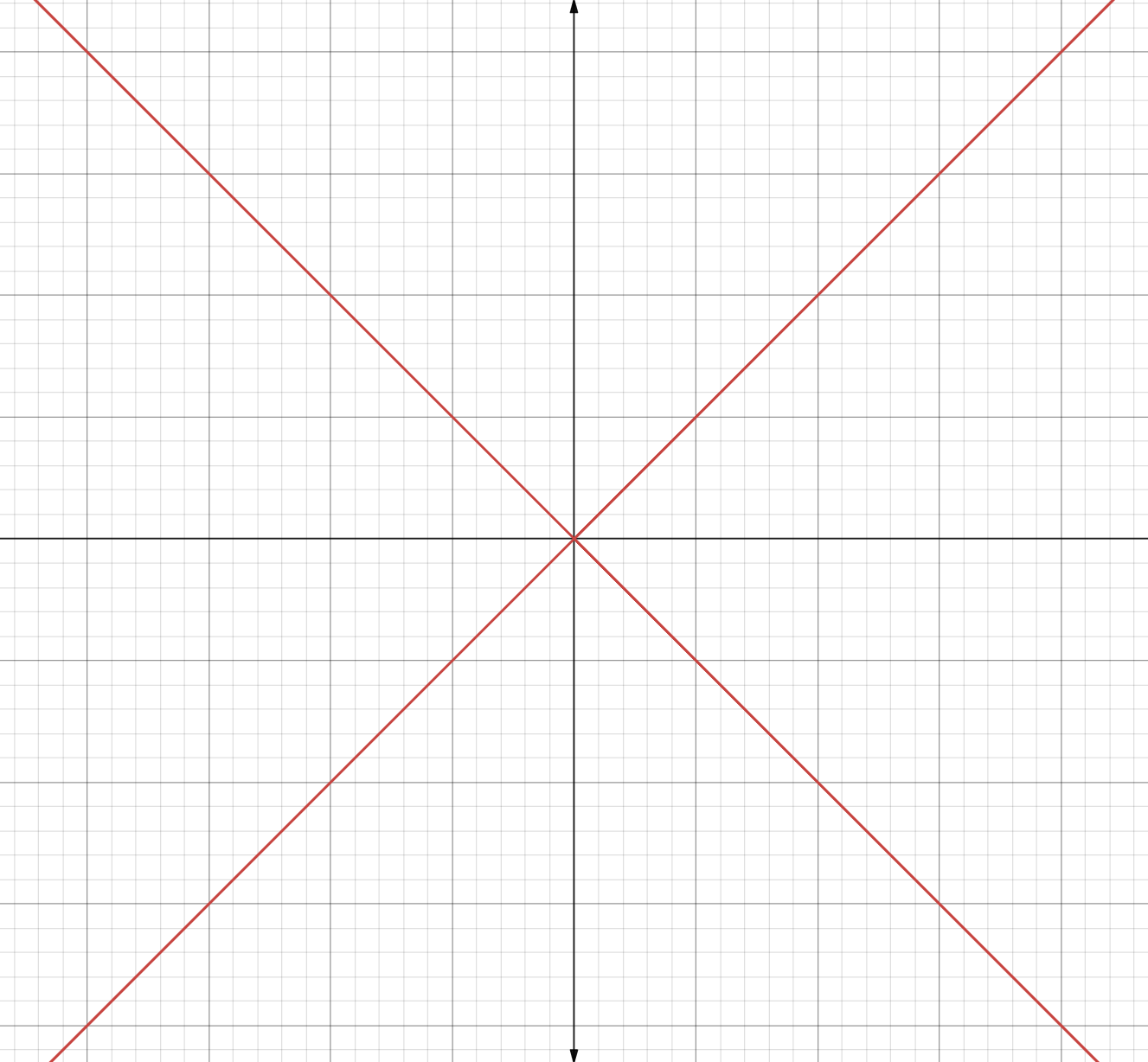
As changes, if , then we get a hyperbola on the right and left side of the -axis, if then we get a hyperbola on the top and bottom sides of the -axis.
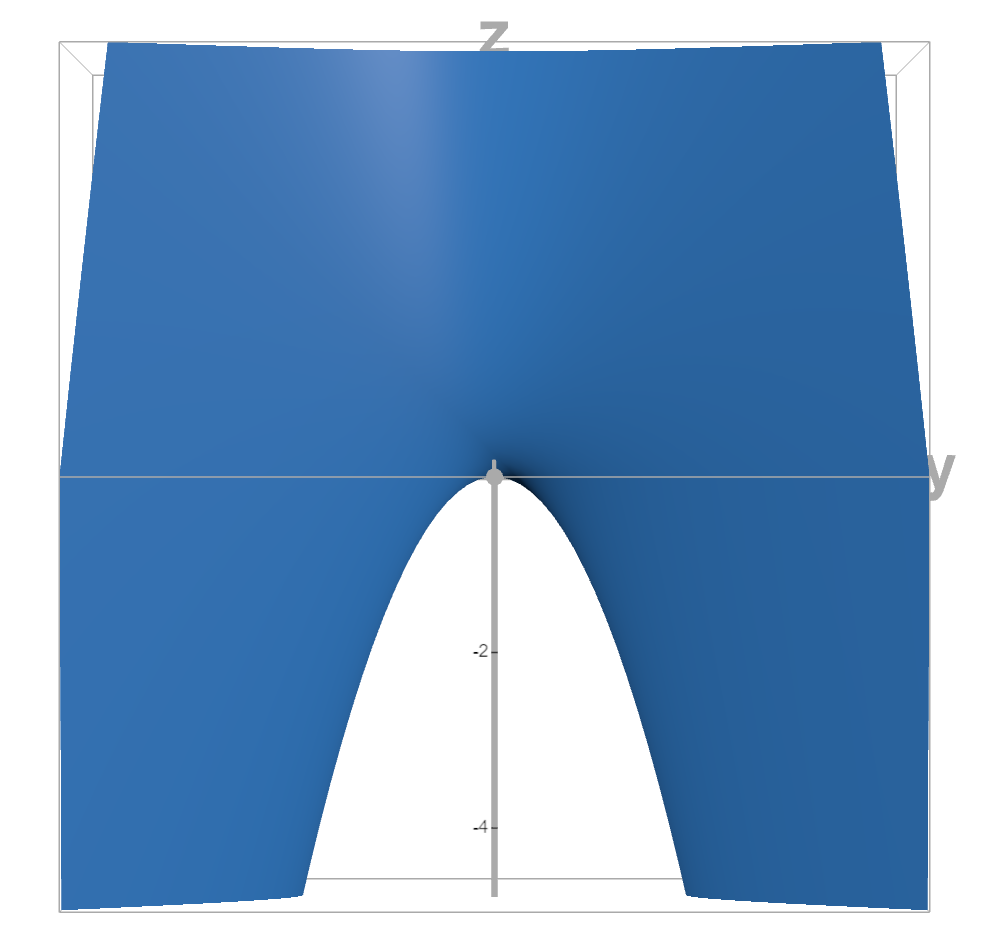
For the level curve, if is treated as a constant, then we simply get which is an upside down parabola, and a normal parabola if is a constant.
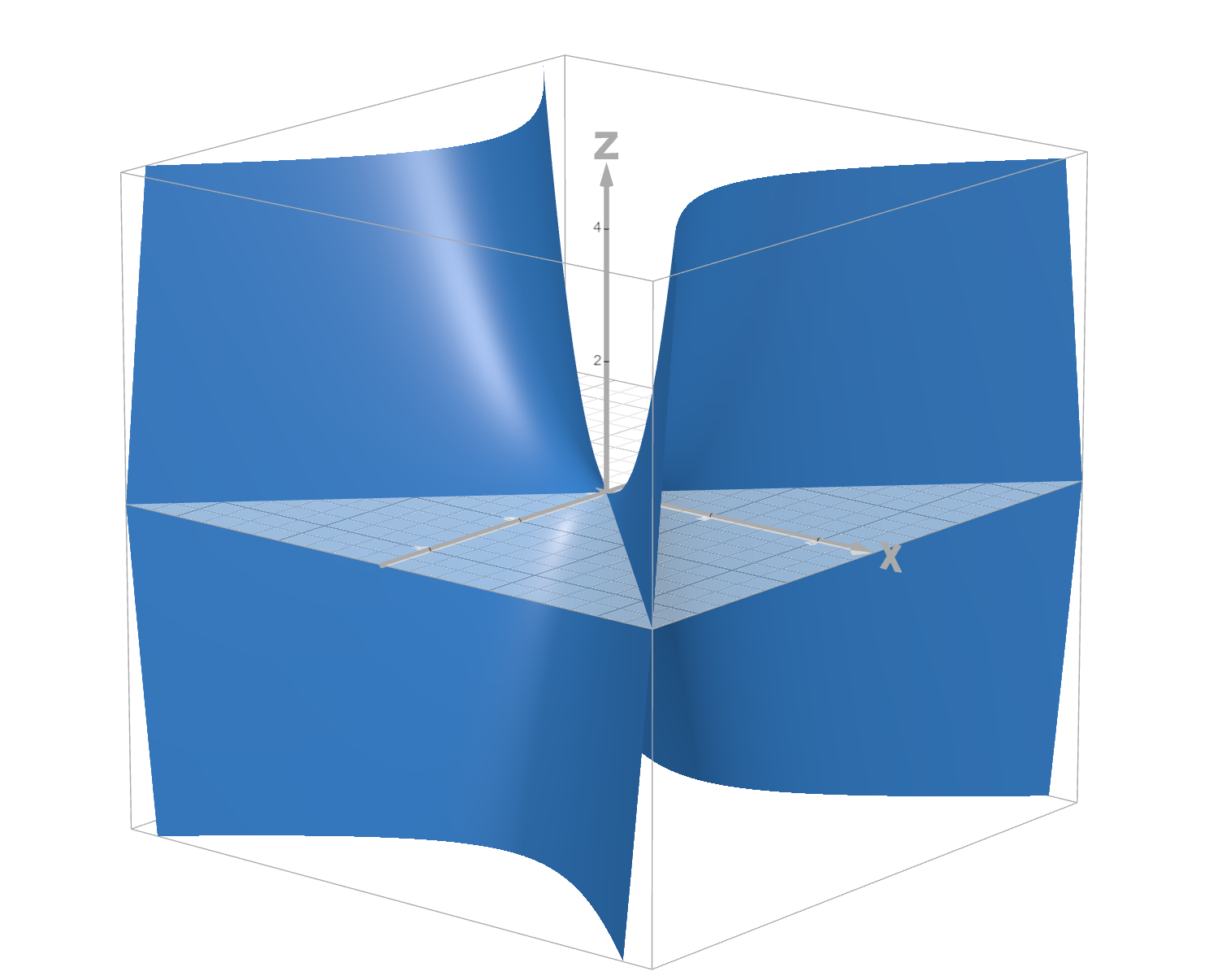
Therefore, if viewed from above, the curve should simply be an X, if viewed from the plane, it should be a parabola:
and if viewed from the plane it should be the same thing flipped upside down to give this:
Problems 1.2: Partial differentiation#
...
Problems 1.3: Tangent planes to surfaces#
...
Problems 1.4: The total differential approximation#
- The specific volume of a compressible fluid flowing through a section of area with mean velocity is given by
where is a constant. If decreases by 5% and increases by 4%, then estimate the percentage change in .
Notice how the question asks for and not , so what we can do is either treat the equation as is and find the partials:
We know that is -5% and similarly is 4%, so we get
And so the answer is . However, we can use the log trick as well;
since we want the percentage change in , we isolate to get . Taking the logarithm of both sides,
And we get .